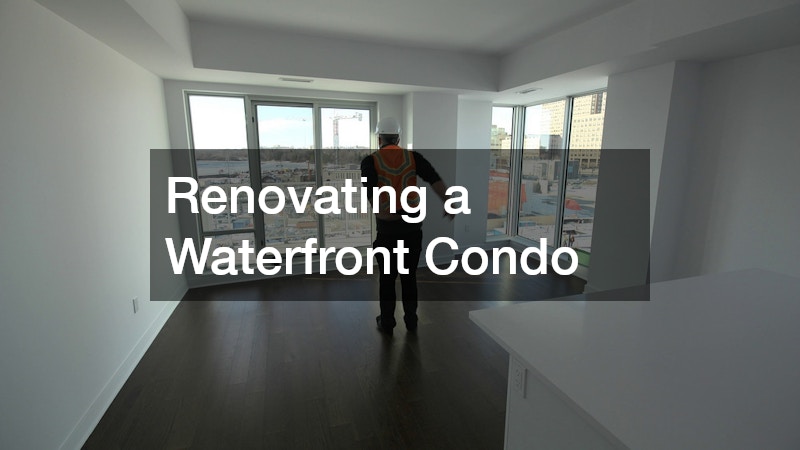
Opening your windows to catch a panoramic ocean breeze or watching a serene lakeside sunset from your private balcony represents the absolute pinnacle of waterfront living. The visual rewards of purchasing and inhabiting a coastal property are unparalleled, offering an immediate connection to nature’s most soothing landscapes. However, when the time comes to update, modernize, or completely overhaul the interior of a waterfront condominium, property owners quickly discover that the remodeling process introduces a unique matrix of structural, legal, and environmental complexities. This is not a standard interior remodel of a detached inland home; it is a high-stakes engineering and logistical puzzle that requires a deep understanding of marine mechanics, multi-family construction parameters, and strict corporate governance.
When you renovate a standalone house, you generally answer only to local municipal building codes and your personal budget. In a waterfront condominium complex, you operate within a shared architectural ecosystem. You are bound by a complex web of homeowners’ association bylaws, rigid property boundaries, shared vertical utility stacks, and a relentless, unforgiving marine climate that actively degrades substandard building materials. A single procedural mistake can result in devastating litigation from the association board, thousands of dollars in fines, or accidental water damage that penetrates neighboring units below yours. Achieving a successful, high-end transformation requires shifting away from generic design trends and embracing a highly structured, technically precise approach.
Managing Association Covenants, Spatial Boundaries, and Structural Realities

The very first step of a successful waterfront condo transformation takes place entirely on paper, long before a demolition hammer ever touches a wall. Unlike detached residential properties, condominium ownership is legally defined under a “walls-in” framework. This means that while you maintain absolute ownership over the airspace and finished surfaces inside your unit, the core structural elements—including the post-tension concrete floor slabs, exterior perimeter walls, balcony railings, and shared utility chases—are classified as common elements managed strictly by the homeowners’ association. Navigating these overlapping legal boundaries requires a meticulous review of your building’s master deed and association bylaws to verify exactly what changes are permitted within your private domain.
A common structural goal for modern coastal renovations is creating an expansive, open-concept floor plan that maximizes natural light and highlights sweeping water views. However, achieving this look in a multi-family tower requires a highly disciplined spatial planning approach. Because you cannot expand your unit’s physical footprint outward through a traditional structural home addition, you must work creatively within the existing concrete boundaries of your space. Demolishing any interior partition wall requires an explicit engineering review to ensure that hidden utility conduits, shared fire-suppression lines, or structural support columns are not disturbed.
- Obtain a complete set of the building’s original architectural and engineering blueprints from the association management team before designing new layouts.
- Retain a licensed structural engineer to verify that proposed wall removals will not compromise the building’s load paths or violate multi-family fire-separation codes.
- Utilize continuous, large-format flooring materials and low-profile architectural baseboards to visually elongate the space and create the illusion of an expansive layout.
When designing your layout, it is helpful to study the floor plan dynamics found in the best waterfront luxury condo developments on the market. These elite properties utilize strategic spatial orientation, placing primary living zones and master suites directly along the glass perimeter while pushing utility zones, laundry closets, and walk-in pantries toward the dark interior core. By mimicking these high-end architectural arrangements, you can capture the grand, unconstrained feel of a luxury estate within a fixed multi-family footprint, all while maintaining absolute compliance with your association’s rigid structural and spatial limitations.
Defending Interior Spaces Against Marine Climates and Moisture
The beauty of a waterfront location comes with a severe environmental trade-off: constant exposure to extreme humidity, intense ultraviolet radiation, and highly corrosive airborne sea salt particles. In a coastal environment, substandard building materials can deteriorate, warp, or corrode within a matter of months. Therefore, every single component selected for your renovation must be evaluated through a lens of marine-grade durability. Standard interior hardware, cabinet hinges, and light fixtures will quickly pit and tarnish if they are fabricated from basic metals. Instead, specify non-corrosive materials such as 316 marine-grade stainless steel, solid brass, or anodized aluminum for all exposed metallic surfaces.
The choice of flooring is equally critical when defending against the realities of waterfront living. Guests and residents will inevitably track moisture, sand, and salt water directly into the living spaces from the beach or pool deck. Traditional solid hardwoods are highly susceptible to buckling and cupping when exposed to shifting indoor humidity levels and wet footprints. To insulate your investment against moisture damage, prioritize low-porosity materials such as porcelain tile, natural stone sealed with hydrophobic barriers, or premium high-density engineered luxury vinyl plank that can withstand heavy traffic and frequent damp mopping.
- Treat all interior drywall surfaces with premium, moisture-resistant primers and anti-microbial paints to prevent the growth of hidden mold and mildew.
- Install high-efficiency inline dehumidification loops within your localized HVAC system to maintain stable indoor humidity levels below fifty percent year-round.
- Select outdoor-rated performance fabrics for sunroom and balcony furniture to prevent rapid color bleaching from intense, water-reflected ultraviolet rays.
- Apply advanced ceramic window films to perimeter glass arrays to block incoming solar heat and protect expensive interior wood veneers from sun damage.
A major point of confusion for many condo owners centers on the maintenance and replacement of exterior architectural assemblies, such as perimeter windows, sliding glass doors, and balcony floor systems. Because the outer shell of the building is a shared common element, individual unit owners are strictly prohibited from modifying building-wide infrastructure like primary structural roofing or full-scale roof replacement initiatives. Instead, your defensive strategy must focus inward. Work with specialized glazing contractors to verify that your unit’s window seals, balcony threshold pans, and sliding door weatherstripping are completely airtight and rated to withstand hurricane-force wind loads. Sealing these critical transition zones internally ensures your living space remains completely impervious to torrential rain and salt air intrusion, independent of the building’s macro-level exterior status.
Executing High-End Mechanical and Plumbing Overhauls

Upgrading the plumbing infrastructure within a waterfront condominium requires an extraordinary level of technical care because your pipes are directly connected to a shared vertical utility stack that services every unit above and below yours. In an inland single-family home, a plumbing mistake affects only your property; in a high-rise condo tower, a blocked drain line or an unvented pipe can cause wastewater to back up into your neighbor’s living space, creating massive liability exposure. Before altering the layout of any kitchen or bathroom, you must execute a comprehensive plumbing inspection to evaluate the exact location, condition, and capacity of the building’s primary waste lines and vent stacks.
Water quality along coastal zones is frequently characterized by high mineral contents and hard water scale, which can rapidly clog high-end fixtures and shorten the operational lifespan of luxury appliances. To safeguard your investment, incorporate localized sediment filtration and water-softening loops immediately downstream from your unit’s primary shut-off valve. When relocating plumbing fixtures during a bathroom remodel, work carefully within the constraints of your concrete floor slab. Because you cannot core-drill or channel into a post-tension concrete floor without risking a catastrophic structural failure of the building’s tension cables, any repositioning of waste lines must be managed through raised subfloors or architectural plumbing soffits.
- Utilize advanced flexible PEX piping networks with heavy-duty brass compression fittings to minimize the number of hidden, below-slab pipe joints.
- Install automated, inline leak-detection valves that continuously monitor water flow and automatically shut off the main supply lines if an unexpected pressure drop occurs.
- Incorporate heavy-duty soundproofing insulation wraps around all shared vertical waste lines to eliminate the disruptive sound of rushing water inside bedroom walls.
When executing a luxury master bath transformation, pay special attention to the floor waterproofing assembly. Utilize complete, elastomeric tanking membranes across the entire bathroom floor pan, extending the waterproofing layer at least six inches up the vertical wall studs. This creates a highly resilient, monolithic barrier that prevents water from escaping into the subfloor structure if a luxury soaking tub overflows or a custom curbless shower drain becomes temporarily restricted. Taking these strict mechanical precautions ensures that your elegant interior oasis remains fully protected against mechanical failures while maintaining a perfectly code-compliant relationship with the building’s shared infrastructure.
Upgrading High-Capacity Electrical Infrastructure Safely
Modernizing an older waterfront condominium invariably requires a massive expansion of the unit’s electrical capacity to support contemporary lifestyle amenities. High-end renovations routinely incorporate power-hungry features such as automated smart-home lighting control hubs, multi-zone climate systems, steam showers, induction cooktops, and hidden motorized window shades. However, before specifying these luxury components, you must retain licensed electrical contractors to evaluate your unit’s primary sub-panel capacity and calculate the total load limit allocated to your space by the building’s main electrical switchgear. Multi-family buildings have fixed total power caps, and you must ensure your dream kitchen does not overload the localized grid.
The physical execution of a high-end electrical installation in a concrete condo building presents unique routing challenges that require specialized solutions. Because you cannot carve wire channels into a solid concrete ceiling slab, routing new overhead LED recessed lighting or architectural pendant fixtures requires the strategic design of dropped drywall ceilings, custom architectural soffits, or shallow crown molding raceways. Experienced commercial electricians understand how to seamlessly integrate these wiring paths into the interior design without sacrificing valuable ceiling height or compromising fire-rated structural barriers.
- Upgrade your old screw-in fuse boxes or outdated breakers to a modern, arc-fault and ground-fault circuit interrupter-protected sub-panel.
- Utilize heavily insulated, marine-grade armored MC cable for all internal wiring paths to protect copper conductors from ambient coastal humidity and salt-induced oxidation.
- Coordinate with the building’s chief engineer to schedule mandatory, temporary power isolation windows if your sub-panel replacement requires access to the main electrical risers.
Furthermore, coastal environmental factors require all electrical components located near balconies, terraces, or open windows to feature heavy-duty weatherproofing. Any sub-panels or disconnect switches located in semi-exposed utility closets must utilize corrosion-resistant NEMA-rated enclosures to prevent humid, salt-laden air from causing premature electrical short circuits or catastrophic panel fires. By matching your advanced interior power demands with uncompromising structural insulation and marine-grade components, you ensure your high-tech smart condo operates with flawless, uninterrupted reliability for decades to come.
Navigating Terraces, Heavy Amenities, and Substructural Oversight

The private terrace or wrap-around balcony of a waterfront condominium serves as the ultimate bridge between indoor luxury and outdoor natural beauty. Transforming this exterior space into an elegant outdoor lounge or entertainment zone is a highly popular design goal, but it introduces extreme structural weight considerations that do not apply to ground-level backyards. Concrete balconies are engineered with strict dead-load and live-load structural limits that cannot be safely exceeded. Before ordering heavy structural elements—such as massive stone planters, heavy outdoor kitchens, or extensive porcelain pavers—you must obtain a signed engineering load clearance from the association’s structural consultants.
Because of these unyielding weight restrictions, popular lifestyle amenities that are commonly found on inland backyard patios are often strictly prohibited on upper-level condo balconies. For instance, placing a massive, high-volume aquatic feature like a commercial swim spa or a multi-person hot tub on a standard balcony is structurally impossible due to the immense weight of the water, which averages approximately 8.34 pounds per gallon. Attempting to install such a heavy feature without explicit structural reinforcement can lead to instantaneous micro-cracking of the concrete slab, severe architectural deflection, or a catastrophic failure of the entire balcony assembly.
- Utilize ultra-lightweight materials, such as structural cellular PVC decking or thin composite tiles, when updating balcony floor finishes.
- Select hollow, lightweight fiberglass or resin planters instead of solid concrete or ceramic pots to minimize unnecessary structural dead weight.
- Anchor all loose outdoor furniture, umbrellas, and decorative screens using heavy-duty, marine-grade fasteners to prevent high-velocity coastal winds from lifting items.
While you focus intently on the structural boundaries of your private balcony, you must also maintain a proactive awareness of the building’s macro-level foundation health. Waterfront structures are continuously subjected to severe geological stresses, including coastal beach erosion, shifting water tables, and saltwater intrusion into underground parking structures. Individual unit owners must carefully monitor the association’s annual engineering reports and actively support funding for local foundation repair initiatives and structural concrete restoration work. Keeping the building’s primary foundation and substructure perfectly sound is the single most important factor in protecting your private unit’s long-term resale value and ensuring the structural safety of your entire coastal community.
A truly successful waterfront transformation is achieved by honoring the unique environmental and legal realities of your property from the very inception of the project. By taking the time to carefully decode association covenants, specify marine-grade non-corrosive materials, execute detailed plumbing inspections, and work within the strict load limits of your concrete structural slab, you can confidently navigate the complexities of multi-family remodeling. This disciplined, detail-oriented approach completely insulates your investment from technical and legal risk, turning your condo into a durable, climate-resilient sanctuary. Partner today with certified, association-approved design engineers and specialized mechanical contractors to bring your ultimate coastal living vision to life with absolute precision.